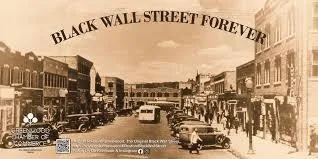
The Blueprint of Excellence: What Greenwood Taught Us About Structured Power
The Blueprint of Excellence: What Greenwood Taught Us About Structural Power
![[HERO] The Blueprint of Excellence: What Greenwood Taught Us About Structural Power](https://cdn.marblism.com/Fo8r8OTCtb_.jpeg "[HERO] The Blueprint of Excellence: What Greenwood Taught Us About Structural Power")
Part 1 of the "Legacy of the Exodus" Series
The Story They Don't Tell You About Black Wall Street
When most people hear about Greenwood: the thriving Black business district in Tulsa, Oklahoma: the narrative often centers on grit, determination, and relentless hustle. And while those qualities were certainly present, focusing solely on individual effort misses the most important lesson Greenwood offers modern entrepreneurs: structural excellence beats hustle culture every single time.
As an Industrial-Organizational Psychologist who has spent years researching "The Great Exodus": the mass departure of Black women from corporate America: I've observed a troubling pattern. We celebrate stories of entrepreneurs who "grind" their way to success, often working 80-hour weeks with minimal infrastructure. But this glorification of the "scrappy ceiling" doesn't just exhaust our community; it prevents us from building the kind of generational wealth that once flourished on Greenwood Avenue.
The truth is, Black Wall Street wasn't built by lone wolves hustling in isolation. It was constructed through interconnected systems of economic power that created a self-sustaining ecosystem. And that distinction matters more today than ever.
Beyond the Mythology: What Actually Made Greenwood Work
Between 1906 and 1921, Greenwood was home to more than 300 Black-owned businesses. We're talking about banks, hotels, theaters, newspapers, grocery stores, law firms, medical practices, and luxury retailers. According to historical records, dollars circulated within the community an average of 36 to 100 times before leaving: a phenomenon economists call "economic velocity."
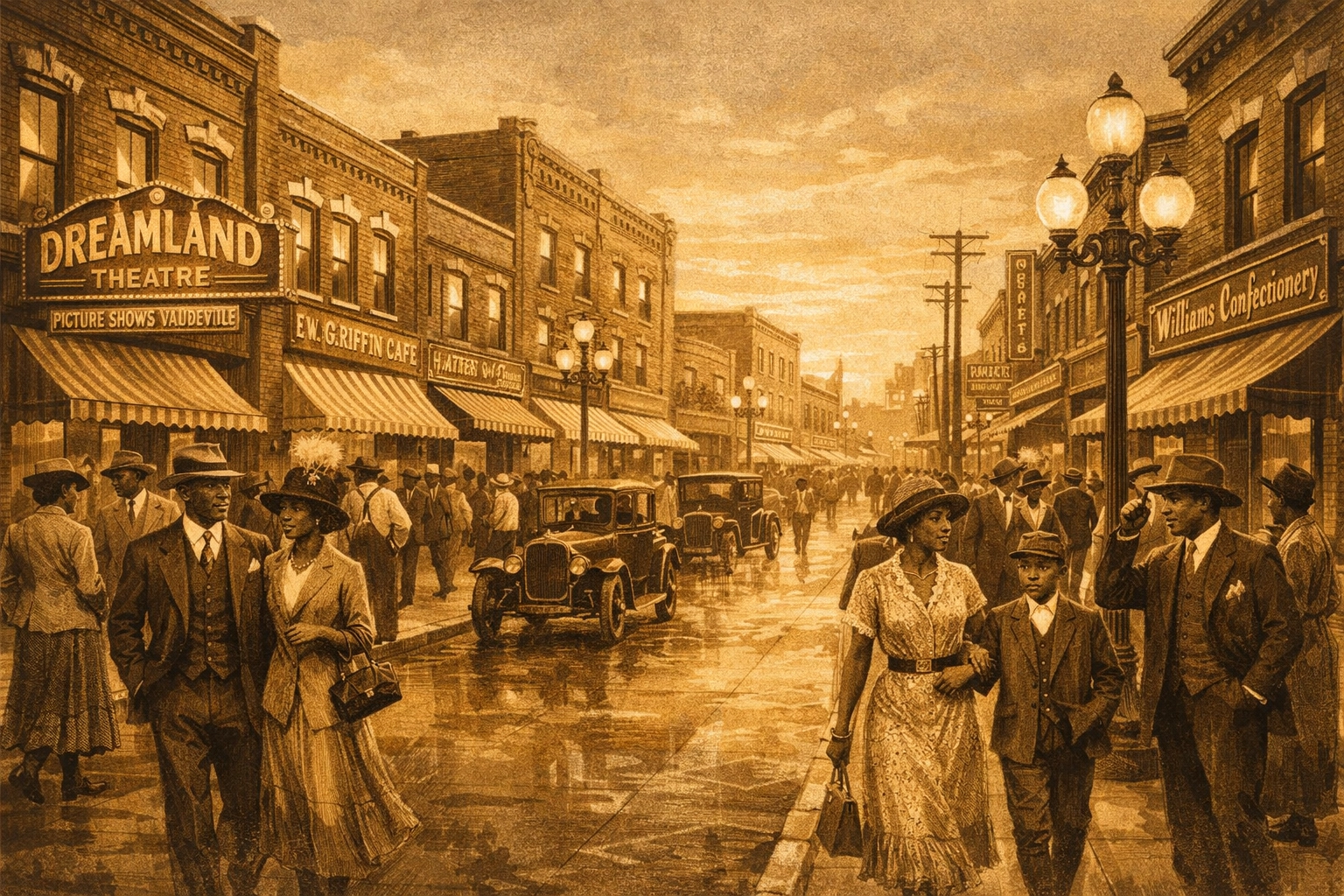
But here's what the history books often skip: these weren't just individual success stories happening to exist in the same geographic area. Greenwood operated as an integrated economic system with three critical structural components:
1. Financial Infrastructure
Greenwood had multiple Black-owned banks, including the Dreamland Theatre owner's banking operations. These institutions didn't just hold money: they provided capital for business expansion, home purchases, and educational investments. When a Black entrepreneur in Greenwood had a viable business idea, they could secure funding from people who understood their market and believed in their vision.
This is what I call structural trust: the kind that exists when your financial institutions are invested in your community's success, not just your individual creditworthiness.
2. Supply Chain Integration
Greenwood businesses didn't operate in silos. The grocery stores bought from Black farmers. The clothing stores purchased from Black manufacturers or distributors. The hotels hired Black construction companies for renovations. The newspapers advertised Black businesses. This wasn't just about "supporting your own": it was about creating economic interdependence that strengthened every link in the chain.
From an organizational psychology perspective, this represents what we now call "network effects." The value of participating in the Greenwood economy increased exponentially with each new business that joined the ecosystem.
3. Knowledge Transfer Systems
Greenwood had formal and informal mechanisms for sharing business acumen. Established entrepreneurs mentored emerging ones. Trade associations shared best practices. Professional guilds maintained quality standards. The Tulsa Star newspaper published business news and economic analysis relevant to the community.
This wasn't casual mentorship over coffee: it was institutionalized knowledge management, the kind that Fortune 500 companies spend millions trying to replicate.
May 31, 1921: When Structural Power Was Systematically Destroyed
The Tulsa Race Massacre wasn't just an act of racial violence: it was a calculated assault on Black economic infrastructure. Over the course of 18 hours, a white mob destroyed more than 1,200 homes, burned 35 city blocks, and decimated nearly every business in Greenwood. Conservative estimates place the property damage at $32 million in 2021 dollars, though the true economic impact was far greater when you account for lost generational wealth.
But here's the critical insight from my research on systemic barriers to Black wealth building: the physical destruction was only part of the strategy.
After the massacre, city officials rezoned Greenwood for industrial use, making it nearly impossible to rebuild the commercial district. Insurance companies refused to pay claims. Banks denied reconstruction loans. The legal system provided no pathway to compensation. This wasn't just about burning buildings: it was about dismantling the structural systems that made Black economic power possible.
Sound familiar?
The Modern Exodus: History Echoing in Corporate America
My dissertation research on "The Great Exodus" examines why Black women are leaving corporate America at unprecedented rates to launch their own ventures. The data from McKinsey's 2023 "Women in the Workplace" report confirms what many of us have lived: Black women face systemic barriers that no amount of individual hustle can overcome.
The "scrappy ceiling" I referenced earlier: this expectation that Black entrepreneurs should bootstrap their way to success with minimal resources: is a direct descendant of the structural destruction that occurred in places like Greenwood. We're told to "lean in" and "work twice as hard," but we're not given access to the three critical systems that made Greenwood thrive: capital, integrated supply chains, and institutionalized knowledge transfer.

According to Nasdaq's 2024 entrepreneurship report, Black-owned businesses receive less than 2% of venture capital funding despite representing 10% of new business formations. Goldman Sachs research shows that Black entrepreneurs are three times more likely to be denied bank loans than their white counterparts with identical credit profiles. These aren't individual failures: they're systemic gaps in our modern economic infrastructure.
The contemporary exodus from corporate America mirrors the original exodus from the Jim Crow South that built Greenwood in the first place. In both cases, Black professionals and entrepreneurs recognized that existing systems weren't designed for their advancement. The difference? The founders of Greenwood understood that individual exit wasn't enough: they needed to build alternative systems.
The Antidote to the Scrappy Ceiling: Building Modern Infrastructure
Here's where organizational psychology meets Black entrepreneurial history: the solution to our current challenges isn't working harder: it's working systematically.
Based on both the Greenwood model and current trends in business consulting, here are the structural pillars modern Black entrepreneurs need:
Access to Capital Systems
We need more than individual angel investors: we need Black-owned investment funds, community development financial institutions (CDFIs), and credit unions focused on small business lending. Organizations like the Nobody Greater Inc. business consulting practice are helping entrepreneurs build bankable business models, but we also need the financial institutions willing to fund them.
Integrated Business Networks
Strategic partnerships between Black-owned businesses create the same economic velocity Greenwood enjoyed. When you hire a Black-owned marketing agency, source from Black manufacturers, and bank with Black-owned institutions, you're building structural resilience into your business model.

Formalized Knowledge Systems
The informal mentorship model isn't sufficient for the complex challenges modern entrepreneurs face. We need structured leadership development programs, industry-specific training, and evidence-based business consulting that transfers institutional knowledge at scale.
The Blueprint Moving Forward
As we honor Black History Month, the lesson from Greenwood isn't just about remembering what was lost: it's about understanding what made it work in the first place so we can rebuild with intention.
The entrepreneurs of Greenwood didn't just open businesses; they built an ecosystem. They didn't just work hard; they worked structurally. They didn't just survive; they created conditions for collective thriving.
In my work with entrepreneurs leaving corporate America, I've seen what happens when talented Black professionals try to replicate corporate success without corporate infrastructure. They exhaust themselves hitting the scrappy ceiling, wondering why hustle alone isn't enough. It's not because they lack ability: it's because they're trying to succeed as individuals in a game that requires systemic solutions.
The modern exodus from corporate America is an opportunity to build something new: or rather, to rebuild something we once had. Not Greenwood exactly, but the principles that made Greenwood powerful: financial infrastructure, integrated networks, and formalized knowledge systems.
That's the blueprint of excellence. That's structural power.
And that's how we turn an exodus into an ecosystem.
This is Part 1 of our "Legacy of the Exodus" series. Next week, we'll explore Farish Street in Jackson, Mississippi, and examine how the "city within a city" model created economic resilience through strategic segregation. Explore our business solutions designed to help you build systematic success.


